
API & Systems Integration
Connect the tools your business depends on so data and work move without manual re-entry.
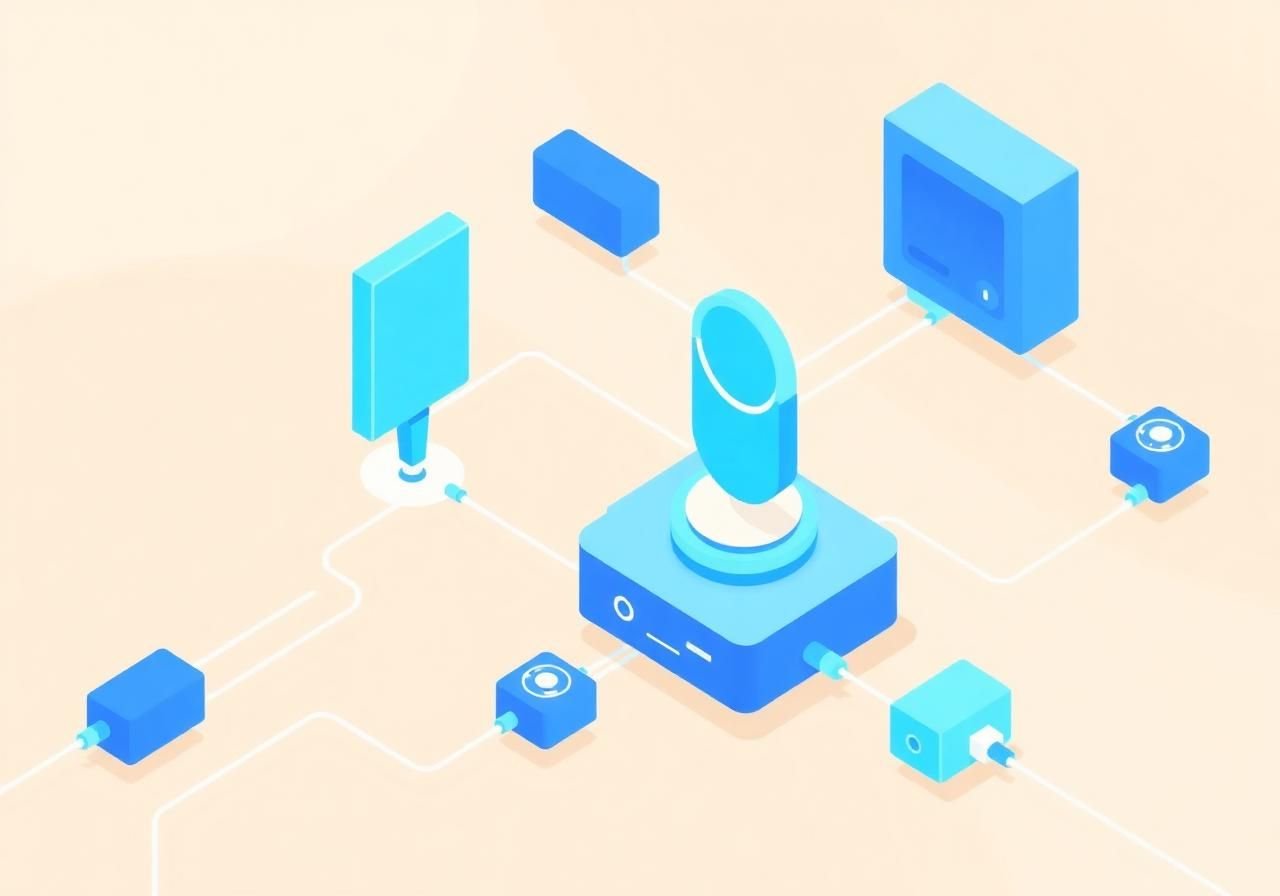
The system that's down at 2am is rarely the one everyone was watching — it's the integration nobody thought about, silently failing because the third-party API changed its response format six weeks ago.
We stay close to your operating reality — the constraints, the edge cases, and the people who have to run the system after launch — so the work holds up long after the first release.
Signals it's time to bring us in
- Data gets re-entered by hand between two or more systems because
- An existing integration breaks silently when a third-party API
- You need systems to react to events in real time — an order placed,
- Data in one system disagrees with the same data in another, and
Capabilities, built to operate in the real world
Api Strategy
An API designed around how it will actually be consumed — by your own frontend, partners, or both — with versioning built in so it can evolve without breaking existing integrations.
Third-Party Integrations
Integrations with the external services your business depends on, built with explicit handling for what happens when that service is down, slow, or returns something unexpected.
Event-Driven Systems
Systems that react to events as they happen — a webhook, a queue, a pub/sub message — instead of polling on a schedule and missing anything that happens between checks.
Data Sync
Two-way or one-way sync between systems with a clearly defined source of truth, so a conflict has a deterministic resolution instead of silently picking whichever write happened last.
Integration Monitoring
Monitoring that catches an integration failure immediately — a changed API response, an auth token expiring — instead of letting it fail silently until someone notices data is missing.
Substance over slideware, from first call to production
This is the part most vendors skip. We make the trade-offs visible, keep the team who scoped the work close to the build, and hand over something your business can actually own.
One accountable team
Product, design, and engineering decisions stay under one roof — no hand-offs that lose the plot.
Visible increments
You see working software on a steady cadence, not status theatre or surprise reveals.
Built to be owned
Documented architecture, clean handover, and code your own team can extend confidently.
Risk raised early
We surface the expensive unknowns up front instead of discovering them at launch.
How the product comes together, step by step
A closer look at what we ship
A spread of the surfaces we design and build for engagements like this — from the primary workspace to mobile and reporting.
Dashboard overview
Mobile experience
Detail & records
Insights & analytics
A path from uncertainty to shipped
- 01
Map every place data currently gets re-entered by hand, and rank those integrations by how much time or risk each one costs.
- 02
Build the highest-cost integration first, with explicit failure handling designed in from the start.
- 03
Define a clear source of truth for any data that exists in more than one system, so sync conflicts resolve deterministically.
- 04
Add monitoring that catches a broken integration within minutes, not whenever someone happens to notice missing data.
- 05
Extend to the next-highest-cost integration once the first is proven stable under real usage.
- A ranked map of manual data entry and its cost, prioritized by
- Working integrations with explicit failure and retry handling.
- A defined source of truth for any data synced across systems.
- Monitoring that alerts on integration failure within minutes.
- Documentation of every integration's behavior and failure modes.
- A recommendation for what to integrate next.
Most integration failures we've seen were silent — the system kept running, just wrong, until someone noticed a number didn't add up. We build explicit failure handling and monitoring into every integration, because "it usually works" isn't a standard for something moving your data or your money.
Common questions
changes? We build explicit handling for that case — retries, fallback behavior, and an alert — so a third-party outage becomes a visible, manageable event instead of silently corrupted data.
We define a source of truth up front for any data that exists in more than one place, so a conflict resolves according to a rule you've agreed to, not whichever system happened to write last.
other? Yes — that's most of this work. We build the translation layer between systems with genuinely different data models and assumptions, with explicit handling for the mismatches.
A system, not a set of disconnected parts
We design the whole pipeline — from where data originates to where your team takes action — so nothing important lives in a spreadsheet or someone's head.
Bring us the messy version.
Tell us what's slow, broken, unclear, or strategically important. We'll help turn it into a sensible plan.