
Mobile App Development
Launch mobile products that feel native, resilient, and aligned with real user behavior.
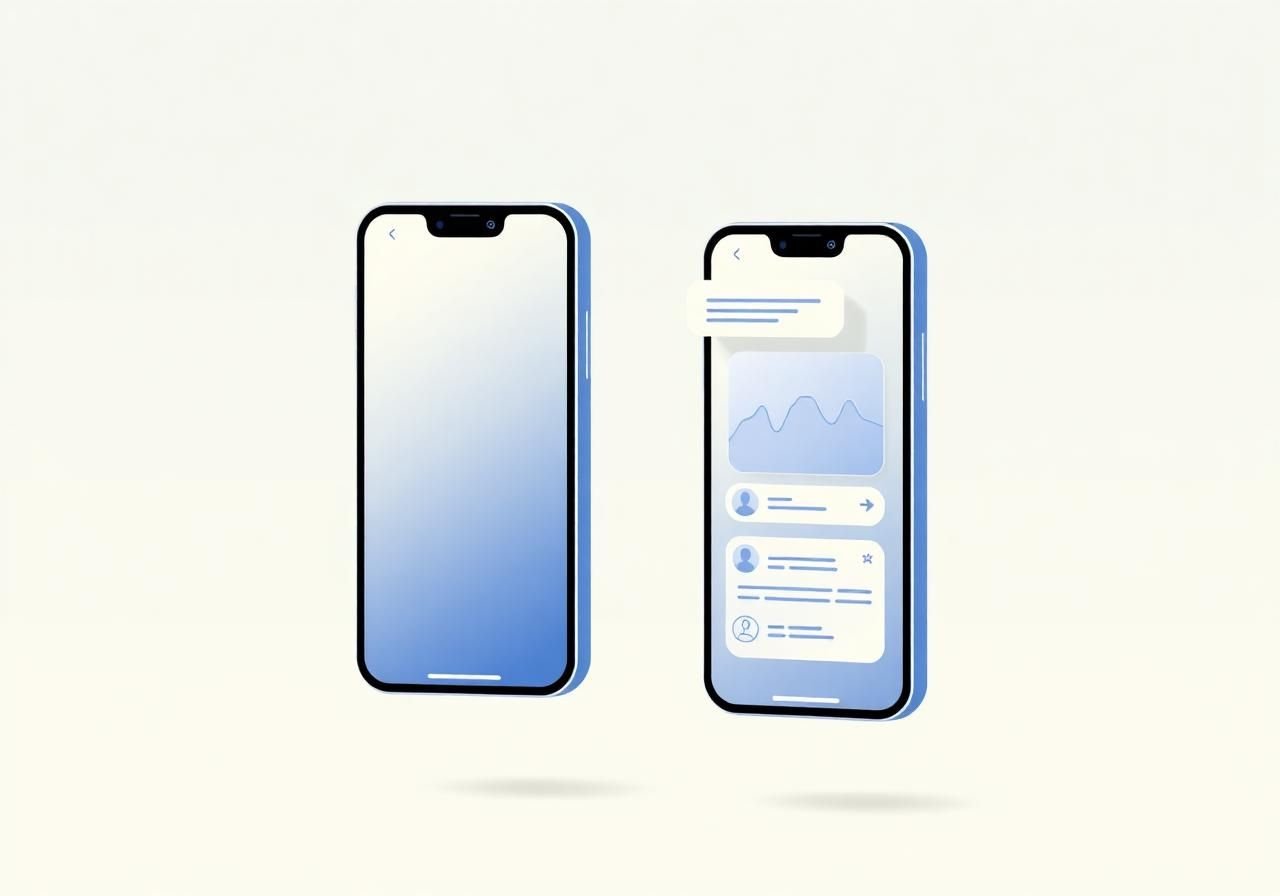
Mobile users forgive almost nothing — a slow launch, a broken offline state, or a notification that shows up at the wrong moment gets your app deleted, not just criticized. We build for that intolerance.
We stay close to your operating reality — the constraints, the edge cases, and the people who have to run the system after launch — so the work holds up long after the first release.
Signals it's time to bring us in
- You need to reach users on iOS and Android and are weighing native
- Your app needs to keep working — at least partially — when
- Push notifications need to be genuinely useful, not a growth-hack
- You're getting close to a launch and need the app store submission
Capabilities, built to operate in the real world
Ios and Android
A build strategy — fully native, or cross-platform where the trade-off makes sense for your app's actual complexity and required platform integrations.
React Native and Flutter
Cross-platform development where it's the right call — usually when platform-specific features aren't central to the product and shipping speed on both platforms matters more.
Offline States
Offline handling that lets core functionality keep working with cached data, with a clear sync strategy for when connectivity returns.
Push Notifications
A notification strategy built around actual user value — the kind users don't disable — with the platform-specific setup (APNs, FCM) handled correctly.
App Store Readiness
App Store and Play Store submission handled to avoid the common rejection reasons, plus screenshots, metadata, and privacy disclosures prepared correctly the first time.
Substance over slideware, from first call to production
This is the part most vendors skip. We make the trade-offs visible, keep the team who scoped the work close to the build, and hand over something your business can actually own.
One accountable team
Product, design, and engineering decisions stay under one roof — no hand-offs that lose the plot.
Visible increments
You see working software on a steady cadence, not status theatre or surprise reveals.
Built to be owned
Documented architecture, clean handover, and code your own team can extend confidently.
Risk raised early
We surface the expensive unknowns up front instead of discovering them at launch.
How the product comes together, step by step
A closer look at what we ship
A spread of the surfaces we design and build for engagements like this — from the primary workspace to mobile and reporting.
Dashboard overview
Mobile experience
Detail & records
Insights & analytics
A path from uncertainty to shipped
- 01
Decide native versus cross-platform based on your actual feature needs, not a default preference — this is the decision that matters most in the whole project.
- 02
Identify the riskiest technical piece — usually offline sync or a platform-specific integration — and prototype that first.
- 03
Design the app's data and sync model around real connectivity conditions, not an always-online assumption.
- 04
Build in increments with testing on real devices, not just simulators.
- 05
Prepare the app store submission alongside development, not as a last-minute scramble that delays launch.
- A native versus cross-platform recommendation with the reasoning
- Working app builds tested on real iOS and Android devices.
- An offline strategy with a defined sync behavior.
- A push notification setup configured correctly for both platforms.
- App store submission materials prepared to avoid common rejections.
- A recommendation for what to build next post-launch.
Mobile users have close to zero patience for a broken offline state or a slow launch. We test on real devices, not just simulators, and we handle the app store submission process as part of the build — not as a surprise step after development is "done."
Common questions
It depends on how much your app depends on deep platform-specific integrations. We'll walk through the real trade-off for your specific feature set rather than defaulting to one answer.
It varies by platform and submission quality — Apple's review is typically a few days, Google's can be faster, but a poorly prepared submission gets rejected and restarts the clock. We prepare submissions to avoid the common rejection reasons.
We design a defined offline mode — which features keep working from cached data, and how sync resolves conflicts when connectivity returns — rather than letting the app just show an error screen.
A system, not a set of disconnected parts
We design the whole pipeline — from where data originates to where your team takes action — so nothing important lives in a spreadsheet or someone's head.
Bring us the messy version.
Tell us what's slow, broken, unclear, or strategically important. We'll help turn it into a sensible plan.