
How to Connect Disconnected Business Systems
Create a shared integration map, source-of-truth decisions, event flows, and monitoring. Read a practical framework from CodersDive.
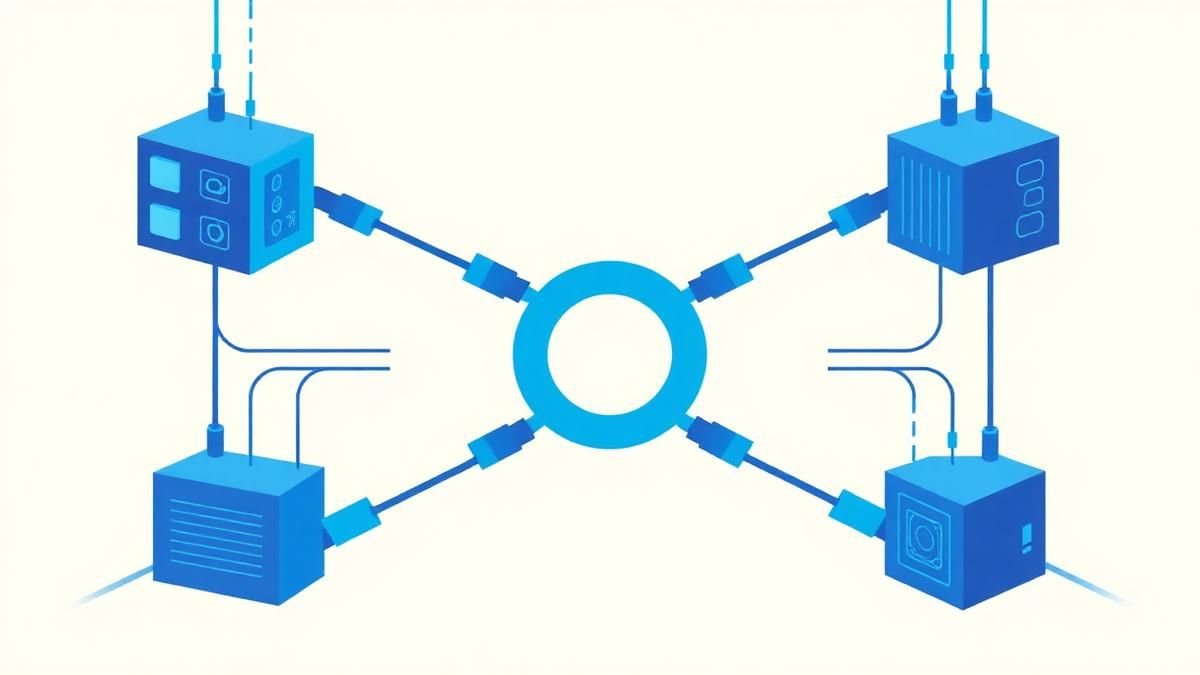
How to Connect Disconnected Business Systems is not mainly a technology question. It is a decision about workflow, handoffs, data, exceptions, and adoption. Teams get into trouble when they select a tool or feature before agreeing on the business behavior that needs to change. Create a shared integration map, source-of-truth decisions, event flows, and monitoring.
Start with the decision, not the tool
The useful starting point is to describe the current situation in plain language. Who is trying to do what? What slows them down? What information do they need? What happens when the normal path breaks? A good answer exposes the real constraint. It may be missing context, weak trust, unclear ownership, inconsistent data, or an experience that asks too much before delivering value.
Define the outcome in observable terms
Then translate the problem into a measurable product or operational outcome. Avoid goals such as "use AI," "modernize," or "improve the UX." Prefer a statement such as: reduce the time required to complete a task, increase the percentage of users reaching a meaningful milestone, lower preventable errors, or give operators reliable visibility into exceptions. A concrete outcome gives the team a way to compare options and say no to attractive distractions.
A practical framework
A practical framework is:
- 1Observe the current process
- 1Map decisions and data ownership
- 1Design for exceptions
- 1Integrate around a source of truth
- 1Measure operational change
The failure mode to watch
The most common failure is treating the visible interface as the whole solution. In reality, the result depends on the surrounding system: data quality, permissions, integrations, ownership, support, analytics, and the behavior of people who must adopt it. A polished screen cannot compensate for a workflow that remains unclear or a system nobody trusts.
Protect the learning in the first release
For a first release, protect the learning objective. Build only enough to test the central assumption with realistic users and operating conditions. Define what success, failure, and "needs another iteration" look like before launch. That makes the project a controlled decision rather than an expensive act of optimism.
Final thought
The right answer to how to connect disconnected business systems is rarely a universal best practice. It is the approach that fits the product stage, risk, users, operating model, and evidence available now. CodersDive helps teams turn that context into a focused plan, a credible release, and a system they can continue to own.
focused discovery or product engineering engagement.
Successful integration logic moves beyond simple API calls and addresses the structural integrity of data as it transitions between isolated environments. For technical leaders, the challenge is not just moving bits, but ensuring the destination system interprets those bits with the same context as the source.
The Canonical Modeling Strategy
To prevent a "spaghetti" architecture where every system requires a custom translation layer for every other system, engineering teams must implement a Canonical Data Model (CDM). A CDM acts as a universal translator. Instead of writing N(N-1) integrations, you map each system once to a standardized internal format.
If you are syncing a CRM (Salesforce) with an ERP (NetSuite), you do not map Salesforce "Account" fields directly to NetSuite "Customer" fields. Instead, you map Salesforce to a standardized "Company" object defined by your business logic.
Decision Criteria for Source of Truth (SoT): 1. Temporal Authority: Which system generates the UID first? (e.g., Lead Gen tools own the email address until a contract is signed). 2. Regulatory Liability: Which system is audited for compliance? (e.g., the ERP, not the CRM, is the SoT for tax-related addresses). 3. Update Frequency: Which system has the highest human touch-point accuracy? 4. Data Enrichment: If System A appends third-party firmographic data, it should likely override System B for those specific attributes.
Implementing Event-Driven Synchronization
Batch processing—synchronizing systems every hour or every night—creates "data drift," where users in System A see different information than users in System B. To bridge disconnected systems effectively, move toward an event-driven architecture using a message broker like RabbitMQ or AWS EventBridge.
Consider a logistics scenario: A customer changes their shipping address in your e-commerce storefront. In a legacy batch setup, the warehouse management system (WMS) might print a label for the old address before the next sync occurs. In an event-driven flow, the "AddressUpdated" event is published immediately. The WMS subscribes to this event and pauses any active fulfillment for that OrderID until the new data is reconciled.
Metrics to Monitor: * Mean Time to Sync (MTTS): The delta between a record update in the source and its reflection in the target. Aim for sub-5 seconds for operational data. * Message Durability Rate: The percentage of events successfully acknowledged by the broker versus those moved to a Dead Letter Queue (DLQ). * Schema Evolution Errors: The frequency of integration failures caused by upstream field changes.
Resilience through Circuit Breakers and Idempotency
Disconnected systems are often disconnected because of legacy constraints or unstable third-party APIs. When connecting them, your middleware must be resilient to downstream failures. Implementing the Circuit Breaker pattern prevents a failing target system from cascading through your entire infrastructure. If the Target API returns a 503 error, the integration layer should stop sending requests and enter a "half-open" state to test for recovery, rather than exhausting your rate limits or memory.
Idempotency is equally critical. In a distributed environment, you will eventually encounter a situation where a message is sent twice or a retry happens after a partial success.
Checklist for Integration Resilience: 1. Idempotency Keys: Ensure every API request includes a unique header (e.g., `X-Request-ID`) so the receiver can ignore duplicate executions. 2. Exponential Backoff: Configure retries to increase in duration (e.g., 1s, 5s, 30s) to allow the target system time to recover from load. 3. Dead Letter Replayability: Design your DLQ so that once a bug is fixed, failed messages can be re-injected into the flow without manual data entry. 4. Observability Hooks: Implement OpenTelemetry to trace a single transaction across three or more disconnected systems.
Frequently asked questions
How do we handle systems that don't have an API? For legacy "black box" systems, use database-level integration via Change Data Capture (CDC) or, as a last resort, headless RPA (Robotic Process Automation) to scrape and input data. CDC is preferred as it monitors the transaction logs of the database (SQL/Oracle) to trigger events without impacting the application's performance.
When should we use a middleware (iPaaS) versus custom-coded connectors? Use an iPaaS (like Workato or Mulesoft) when the integration involves standard SaaS-to-SaaS workflows that require low maintenance and high visibility for non-developers. Direct custom code is necessary when you require sub-millisecond latency, complex data transformation logic that exceeds "drag-and-drop" capabilities, or when the cost of iPaaS volume-based pricing becomes prohibitive.
What is the best way to handle data conflicts between two systems? Establish a "Last-Write-Wins" policy for low-stakes data, but implement a versioning or timestamp check for critical records. The integration layer should compare the `updated_at` timestamps of both records; if the incoming data is older than the existing data in the target system, the update should be rejected and logged as a conflict for manual review.
Have a similar decision in front of you? Talk to CodersDive about a focused discovery or product engineering engagement.
Discuss your product Digital Transformation
How to Map a Manual Workflow Before Automating It
Observe actual work, exceptions, handoffs, data, decisions, and failure paths before choosing technology. Read a practical framework from CodersDive.
 Digital Transformation
The Best Internal Tools Start With Operational Friction
Use repeated delays, duplicate entry, visibility gaps, and approval bottlenecks to find valuable opportunities. Read a practical framework from CodersDive.
 Digital Transformation
Legacy Modernization Without a Big-Bang Rewrite
Modernize through boundaries, APIs, strangler patterns, data plans, and incremental value. Read a practical framework from CodersDive.